
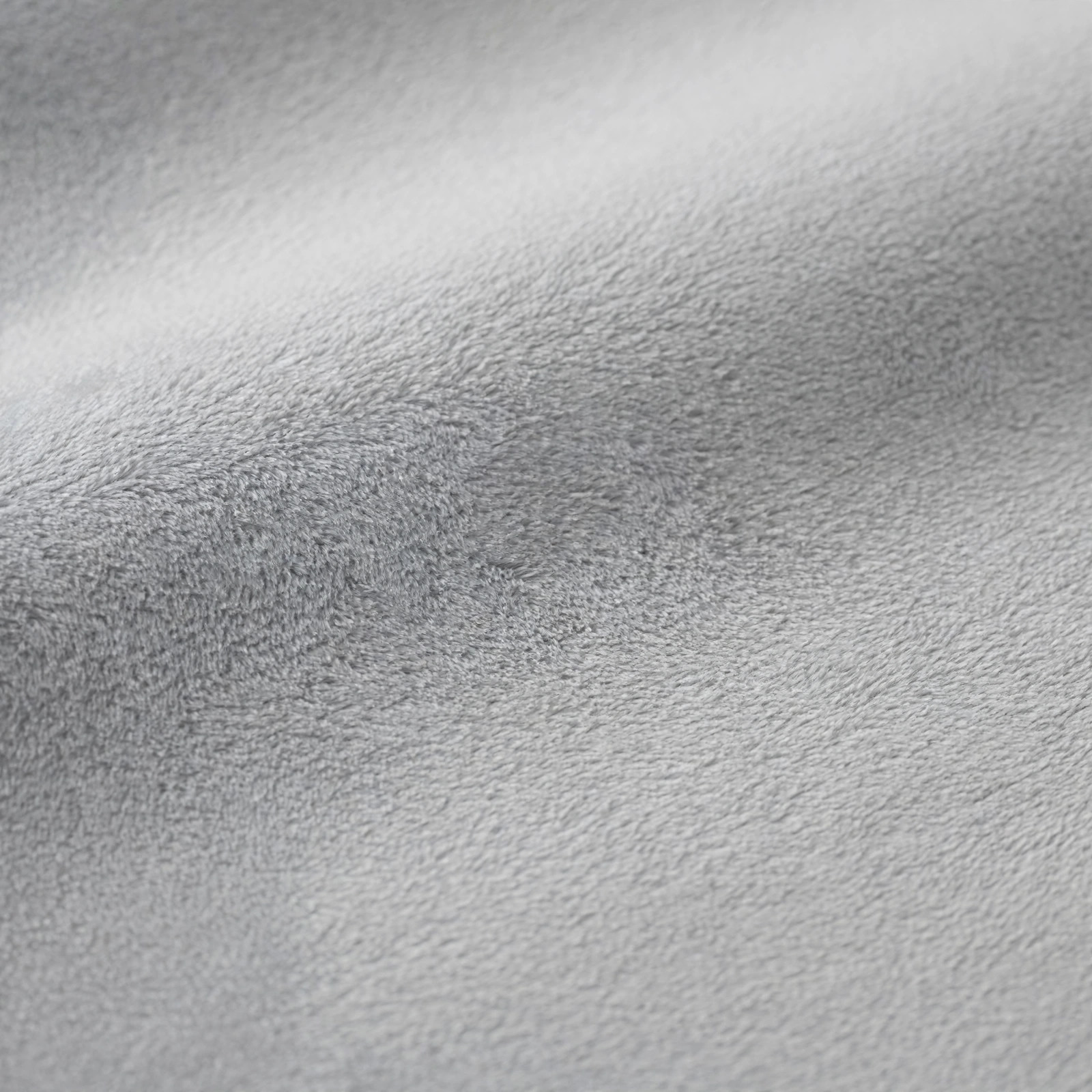
Polyester is the most misunderstood fibre in bedding. Buyers either dismiss it as the cheap option or accept whatever a supplier labels microfiber, and both reactions cost money. In reality, polyester bedding fabric spans an enormous quality range, from coarse filament cloth that sleeps hot and pills fast, to finely split microfiber that is soft, durable and genuinely engineered. The difference lies in grades, denier, splitting and finishing, and almost none of it is visible in a product photo. When you work with polyester fabric manufacturers in China, the professional skill is specifying the grade, not just the fibre.
This guide explains how polyester bedding fabric is actually graded, what each grade does in use, and the specification points that separate serious microfiber from marketing.
Start With Denier: The Number That Defines Fineness
Polyester fineness is measured in denier, the weight in grams of 9,000 metres of filament. Lower denier means finer filaments. Standard textile polyester filament might run 75 to 150 denier for yarn, with individual filaments around 1 denier or above. True microfiber begins below roughly 0.3 denier per filament in bedding applications, achieved either by spinning extremely fine filaments directly or, far more commonly, by splitting a composite filament into multiple wedge-shaped segments during finishing.
The practical consequence: two fabrics both labelled “microfiber” can differ threefold in filament fineness, and with it in softness, drape, moisture behaviour and price. A specification that does not state denier, or at least filaments per yarn cross-section, is a specification that lets the factory choose the cheapest interpretation.
Split Microfiber Versus Direct-Spun: Why It Matters
Split microfiber is produced from a bicomponent filament, typically polyester and polyamide segments arranged like slices of a pie, which is split apart chemically or mechanically during dyeing and finishing. The splitting creates the characteristic star-shaped cross-section with channels between segments. Those channels are why split microfiber absorbs moisture, traps dust and cleans so effectively, and why it feels softer than its weight suggests. Direct-spun fine filament, sometimes sold as microfiber, lacks the split structure: it is smooth, round filament, finer than standard but without the channels, the absorbency or the hand.
When you buy from polyester fabric manufacturers in China, ask directly whether the microfiber is split type, and what the segment count is. A factory that splits will answer precisely. One that cannot explain its filament is selling a label.
GSM: The Specification Buyers Underuse
Because microfiber is light by nature, GSM — grams per square metre — becomes the honest measure of substance. Bedding microfiber commonly ranges from about 70 GSM for light summer cloth to 120 GSM and above for brushed, premium-feel fabric. A low-GSM microfiber can be a perfectly good product for its purpose, but sold as equivalent to a heavier grade it is simply less fabric. Weight also interacts with durability: very light microfiber in high-friction uses wears faster. Specify GSM with a tolerance, verify it on arrival like any other fabric, and compare quotes per square metre at equal GSM — never per piece, where size and weight differences hide.
Brushed, Peached and Plain: Surface Finishes Explained
Most bedding microfiber is sold with a surface finish. Brushing raises the filament surface mechanically, producing the soft, warm, slightly fuzzy hand consumers associate with microfiber bedding; double-brushed fabric is treated on both faces. Peaching uses fine abrasive rollers for a subtler, suede-like surface. Unbrushed microfiber is smoother, cooler and more slippery, used where a crisp hand is wanted. Each finish consumes fibre and adds cost, and over-brushing weakens the fabric and accelerates pilling. Ask which finish, on how many faces, and judge washed samples, because surface finishes are exactly where first impressions and long-term performance diverge.
Weft, Warp and Knitted Polyester
Polyester bedding fabric comes in three constructions buyers should distinguish. Woven microfiber, plain or twill weave, is dimensionally stable and the standard for sheeting and duvet covers. Warp-knitted microfiber offers more stretch and softness with excellent production efficiency. Weft-knitted jersey gives the most stretch and a T-shirt-like hand, at the cost of stability and snag resistance. Neither is better in the abstract; the error is buying one while expecting another’s behaviour. A factory’s product range will usually reveal its construction strength, woven specialists and knitting specialists are rarely the same factory.
The Heat Question, Answered Honestly
Polyester’s reputation for sleeping hot comes from smooth round filament that neither absorbs nor moves moisture. Split microfiber behaves differently: the channel structure wicks moisture along the fabric, and in light constructions many sleepers find it neutral. What no polyester does is absorb moisture into the fibre the way cotton does, so in humid conditions and for very warm sleepers, cotton or blends still hold an advantage. A professional supplier will tell you this. A supplier who claims microfiber breathes exactly like cotton is telling you what closes sales, not what serves your customers, and that distinction should shape who you buy from.
Pilling, Static and Care: The Ownership Tests
Microfiber’s real-world weaknesses are specific and testable. Pilling appears faster on over-brushed or low-denier-quality fabric, so test after repeated washing, not on the new sample. Static build-up in dry climates can be managed with antistatic finishes, which should be specified if your market is dry. Colour fastness on polyester requires disperse dyeing done properly; ask about dyeing and fixation, particularly for deep shades. And heat sensitivity means care labels matter: microfiber’s softness advantage disappears if consumers tumble it at high heat. Buyers who specify and test these four points rarely have microfiber problems; buyers who buy a photo and a price usually do.
Comparing Quotes From Polyester Fabric Manufacturers in China
Line quotes up by denier or filament description, split or direct-spun, construction, GSM, finish type and faces, and dye class. Only then does price per metre mean anything. Expect genuine split microfiber at bedding weights to cost meaningfully more than standard filament cloth, because splitting adds chemistry, time and fibre loss. When one quote undercuts the field dramatically on “microfiber”, the usual truth is direct-spun filament, lighter GSM, or single-face brushing, any of which may actually serve a price-led product honestly, provided it is specified and sold as what it is.
INTEGRITY FABRICS includes microfiber within its polyester bedding range in the quotation tool, specified by construction and weight rather than by label alone, at our standard minimum order of 1,000 metres per fabric. If your programme mixes microfiber with cotton or knitted bedding fabrics, our range covers those categories from the same factory floor.
A Buyer’s Spec Sheet for Microfiber, Filled In
Here is what a professional microfiber specification looks like assembled. Construction: woven plain weave, split microfiber. Filament: bicomponent polyester-polyamide, split into 16 segments, finished denier per filament below 0.2. Weight: 95 GSM plus or minus 3 percent. Surface: brushed both faces, medium pile. Colour: reactive-equivalent for polyester means disperse dyed; for white, optical brightening to a stated whiteness. Performance: pilling grade 4 or better after five washes, shrinkage within 2 percent, colour fastness grade 4 to washing and rubbing. Packing: rolled, lot-labelled. A factory receiving this sheet knows exactly what to weave, how it will be judged, and that you will measure it. A factory receiving the word microfiber knows none of those things, and will price and produce accordingly.
Care and Labelling Advice for Microfiber Bedding
Because polyester behaves differently from cotton in the wash, your care instructions are part of the product quality. Specify wash temperatures conservatively, since sustained high heat dulls the surface of microfiber and can set creases. Warn against fabric softeners, which coat the split filaments and destroy the absorbency that makes the fabric valuable, a counter-intuitive point your customers will not guess. Recommend separating darks early, because the channelled structure that wicks moisture also picks up loose dye from other garments in the first washes. Factories that sell microfiber seriously will supply care guidance with the fabric; treat its absence as another small signal about whether the supplier understands its own product.
Hybrids and Blends: Microfiber Meets Cotton
Pure synthetics are not the only polyester story. Hybrid constructions weave or knit microfiber with cotton, aiming at cotton’s absorbency with microfiber’s durability and easy care. Warp-faced constructions put polyester where abrasion happens and cotton where skin rests; intimate blends mix the fibres within the yarn itself. These hybrids deserve the same specification discipline as pure microfiber, plus the composition testing applied to any blend claim. They also open honest marketing positions: a hybrid sold on its real balance of properties will outsell a pure product sold on a label, because customers review what they experience. When comparing hybrid quotes, line up blend ratio beside denier and GSM, and judge washed samples only.
Frequently Asked Questions
What denier counts as real microfiber for bedding?
As a working rule, below about 0.3 denier per filament, achieved by splitting a bicomponent filament, behaves as genuine microfiber in softness and absorbency. Finer round filament without splitting is better described as fine-denier polyester; it can be a good fabric, but it will not perform like split microfiber.
Why does cheap microfiber pill so quickly?
Usually a combination of short or weak filaments, aggressive brushing that damages the surface, and low fabric weight. Request pilling test results after washing cycles, and compare brushed samples only after washing them yourself several times.
Is microfiber a good choice for hotel bedding?
It can be, where fast drying, durability and easy care dominate, and many laundries prefer its energy profile. Specify heavier GSM and split microfiber for hotel use, and test under industrial washing conditions, which are far harsher than domestic cycles.
How should I specify microfiber in an order?
State split or direct-spun, denier or filament count, construction (woven or knitted), GSM with tolerance, finish and number of brushed faces, and dye class. Those six items convert “microfiber” from a label into a fabric.
Is split microfiber worth the price premium over standard filament?
For products sold on softness, absorbency or cleaning performance, yes, because the split structure is what delivers those behaviours. For price-led products where hand feel is secondary, honest direct-spun filament at the right GSM is the better engineering choice. The expensive mistake is paying split prices for filament performance, which is exactly what happens when denier is left out of the specification.
Can microfiber be blended with cotton?
Yes, polyester-cotton blends are a separate category with their own logic, balancing cotton’s absorbency with polyester’s durability and easy care. If your product needs that balance, ask for the blend ratio to be specified and tested like any other composition claim.
Specify the Grade, Not the Label
If your microfiber programme has ever surprised you, the fix is specification. Browse our polyester and microfiber bedding constructions in the fabric quotation tool, or email your target GSM and construction to [email protected], and we will quote the grade in numbers you can verify on arrival.